What is the difference between semaglutide and tirzepatide?
Semaglutide (Wegovy) is a single GLP-1 receptor agonist: it slows gastric emptying, improves glucose control, and reduces appetite. Tirzepatide (Zepbound) is a dual GIP/GLP-1 receptor agonist — it activates a second pathway (GIP) that amplifies the weight-loss effect. Clinical trials show the dual agonist produces greater average weight loss, which is why it's often the first choice in Boca Raton when cost allows.
Why is the 3-4 month evaluation the clinical standard?
Both medications must be assessed at 3 to 4 months to decide on dosage adjustments or a medication switch. Individual response varies widely — some patients need a higher dose, some respond better to the other agent. The evaluation is the checkpoint that keeps treatment on track.
The short version
- Semaglutide (Wegovy) is a single GLP-1 receptor agonist that slows gastric emptying, improves glucose control, and reduces appetite.
- Tirzepatide (Zepbound) is a dual GIP/GLP-1 agonist that activates a second pathway amplifying the effect, and trials show it produces greater average weight loss.
- Both medications must be assessed at 3 to 4 months to decide on dosage adjustment or a switch, because individual response varies widely.
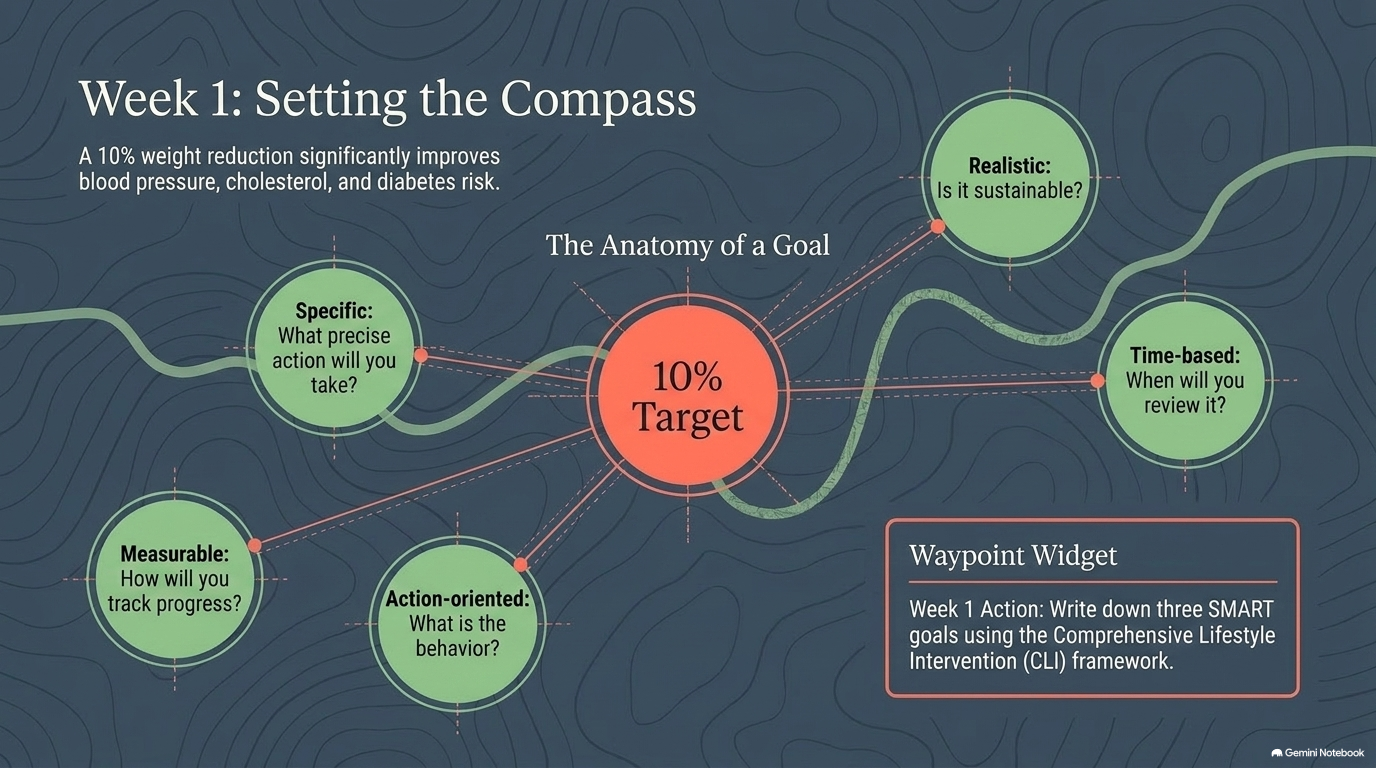
- FDA guidelines require pairing pharmacotherapy with a comprehensive lifestyle intervention to preserve skeletal muscle and support long-term metabolic health.
- Adequate protein at 1.2-1.6 g/kg plus resistance training signals muscle retention through the protein-mTOR cascade during the deficit.
- Without maintenance planning weight regain is common; daily weighing, high activity, and structured meals are what separate the 11% who keep it off.
Why must medication be paired with lifestyle intervention?
FDA guidelines require pairing pharmacotherapy with a comprehensive lifestyle intervention (CLI) to preserve skeletal muscle and support long-term metabolic health. The protein-mTOR cascade matters here: adequate protein (1.2-1.6 g/kg) plus resistance training signals muscle retention during the deficit — without it, a meaningful share of weight lost can be lean mass.
What happens when you stop?
Without maintenance planning, weight regain is common — studies of long-term maintainers show that sustained habits (daily weighing, high activity levels, structured meals) are what separate the 11% who keep it off. Programs in Boca Raton build the maintenance protocol into the plan from day one.